
 English
 Español
 Portugues
 Pусский
 Français
 Deutsch
 한국어
한국어 العربية
 Italiano
 Svenska
 Polski
 ไทย
ไทย Türk dili
 हिन्दी
 Tiếng Việt
 中文
中文 dansk
dansk қазақ
қазақ বাংলা
বাংলা فارسی
فارسی українська
 беларускі
 Suomalainen
 o'zbek
 Србија
 پښتو
پښتو საქართველოს
 Shqipëria
 Afrikaans
UPVC ya kutula ntunga ya ntu
UPVC Pipe Fitting Injection Mould: Overview and Key Considerations UPVC (Unplasticized Polyvinyl Chloride) pipe fittings are widely used in plumbing, irrigation, and industrial fluid transport systems due to their durability, chemical resistance, and cost-effectiveness. The production of these fittings relies heavily on injection moulding, a high-efficiency manufacturing process that ensures precision, consistency, and scalability. Below is a detailed description of UPVC pipe fitting injection moulds, covering design, material selection, manufacturing processes, and quality control. 1. Mould Design and Structure The injection mould for UPVC pipe fittings is typically made from high-grade tool steel or hardened alloys to withstand high pressure and temperature during production. The mould consists of several critical components: - Cavity and Core: These define the internal and external shapes of the fitting. The cavity forms the outer surface, while the core shapes the inner diameter. - Runner System: Channels that guide molten UPVC from the injection machine nozzle to the mould cavities. - Cooling System: Integrated water or oil channels to regulate mould temperature and ensure uniform cooling, minimizing warpage. - Ejection Mechanism: Pins or plates that release the solidified fitting from the mould after cooling. Design considerations include wall thickness uniformity, draft angles for easy ejection, and gate placement to avoid flow marks or weld lines. 2. Material and Processing Parameters UPVC is a rigid thermoplastic with high melt viscosity, requiring precise control during injection moulding: - Temperature: The barrel temperature typically ranges between 170°C and 210°C, while the mould is maintained at 30°C–60°C to prevent premature cooling. - Injection Pressure: High pressure (800–1,500 bar) is needed to fill the mould completely due to UPVC’s low flowability. - Cycle Time: Depends on fitting size and thickness but usually ranges from 20 to 60 seconds. 3. Manufacturing Process 1. Material Preparation: UPVC pellets are dried to remove moisture, which can cause defects like bubbles. 2. Injection: Molten UPVC is injected into the closed mould under high pressure. 3. Cooling: The mould remains closed until the part solidifies. 4. Ejection: The fitting is ejected, and any excess material (flash) is trimmed. 5. Post-Processing: Some fittings may require threading or surface treatment. 4. Quality Control Critical quality checks include: - Dimensional Accuracy: Verified using calipers or CMM (Coordinate Measuring Machine). - Pressure Resistance: Hydrostatic testing ensures leak-proof performance. - Visual Inspection: Surface defects like sink marks or discoloration are examined. 5. Advantages of Injection Moulding for UPVC Fittings - High Production Efficiency: Suitable for mass production with minimal waste. - Precision and Consistency: Ensures tight tolerances and repeatability. - Complex Geometries: Allows intricate designs like elbows, tees, and reducers. Conclusion Injection moulding is the preferred method for manufacturing UPVC pipe fittings due to its efficiency, precision, and scalability. Proper mould design, material handling, and process optimization are essential to producing high-quality fittings that meet industry standards for durability and performance. Advances in mould technology continue to enhance production speed and reduce costs, further solidifying UPVC fittings' role in modern piping systems.
Bima
kitini:
-
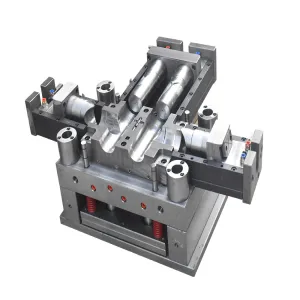
Mold
Kukabula: UPVC ya kutunga tiyoNtalu ya bantu me tala: 567Ntalu:Kilumbu ya kubasika: 2025-10-28 21:57:28MoldZina ya moule:MoldDibulu: 2 mabuluBunene ya moule:75mmKibende: Germany2316 china2316 or4cr13 sambu na dibulu mpi ntuKielo :kielo ya directntungulu ya mfututu:Nzila ya mafutaMpasi ya core/cavité: HRC 40-45°degree na nima ya kusadila tiya ya aspirateur .Mashini ya kusala ba injection:320T Pvc mpasi ya injection mpi solution .1. Kukonda bima:Kima ya ke monisa nde mfututu lenda fuluka ve ke salamaka mbala mingi na nzila ya kutula ba tiyo ya kutula ntunga. Ntangu masini ya kutula ba injection yantikaka kaka kusala, sambu na temperature ya moule kele fioti mingi, kuvidisa tiya ya bima ya PVC ya... -
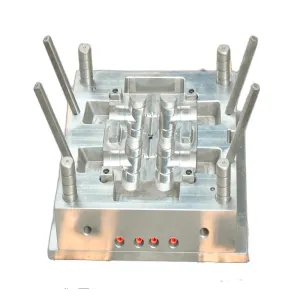
UPVC Skew Croix de plime ya kutula ba-poignée
Kukabula: UPVC ya kutunga tiyoNtalu ya bantu me tala: 584Ntalu:Kilumbu ya kubasika: 2025-10-30 21:15:18UPVC Skew Cross MoldZina ya moule:UPVC Skew Cross Mold ya kuyidikaDibulu: 1 mabuluBunene ya ntoto:110mmKibende: Germany2316 china2316 or4cr13 sambu na dibulu mpi ntuKielo :kielo ya directntungulu ya mfututu:Nzila ya mafutaMpasi ya core/cavité: HRC 40-45°degree na nima ya kusala thérapie ya tiya ya aspirateurMashini ya kuyidika bankisi: 450 T . Taizhou Huangyan Hong Jin mold Co., Ltd wasikidiswa muna mvu wa 2002.Tuna ye salu kia tunga e mpila yavangilwa yo vanga e nsongo mia lunga-lunga e tubi se vioka mvu 23.Beto kele na kiese ya kusala kumosi ti beno ya nda.Kulanda kele bansangu ya mfunu sam...
Nsangu
kitini:
-
[Company News]Foto ya bakiliya
2025-09-23 15:20:39
Mambu
kitini:

Bavideo
kitini:
Ba mvutu ya kusosa kele ve!
Kubaka
kitini:
Ba mvutu ya kusosa kele ve!
Kubaka bantu na kisalu
kitini:
Ba mvutu ya kusosa kele ve!
Bima ya bo ke lomba
Ba mvutu ya kusosa kele ve!




 Nki
Nki Telefone