
 English
 Español
 Portugues
 Pусский
 Français
 Deutsch
 한국어
한국어 العربية
 Italiano
 Svenska
 Polski
 ไทย
ไทย Türk dili
 हिन्दी
 Tiếng Việt
 中文
中文 dansk
dansk қазақ
қазақ বাংলা
বাংলা فارسی
فارسی українська
 беларускі
 Suomalainen
 o'zbek
 Србија
 پښتو
پښتو საქართველოს
 Shqipëria
 Afrikaans
PP ya nzila tatu ya kutula ba injection .
Three-Way Injection Mold for PP (Polypropylene) Products A three-way injection mold is a specialized tool used in plastic injection molding to produce complex PP (polypropylene) components with high precision and efficiency. This type of mold is designed to accommodate three distinct parting lines or mold-opening directions, enabling the production of intricate geometries that would be difficult or impossible to achieve with conventional two-way molds. Key Features and Advantages 1. Multi-Directional Parting Lines Unlike standard molds that open along a single axis, a three-way mold incorporates additional side actions or lifters to create undercuts, threads, or internal features. This allows for the molding of complex parts—such as caps, closures, or connectors—without secondary machining. 2. Material Suitability for PP Polypropylene is a widely used thermoplastic due to its excellent chemical resistance, flexibility, and durability. The three-way mold is optimized for PP’s low viscosity and high shrinkage rate, ensuring dimensional stability and consistent part quality. 3. Enhanced Production Efficiency By integrating side cores or sliding mechanisms, the mold reduces cycle times and minimizes manual intervention. Automated ejection systems further streamline mass production while maintaining tight tolerances (±0.05–0.1 mm). 4. Design Flexibility Engineers can incorporate features like collapsible cores, angled lifters, or hydraulic/pneumatic actuators to address challenging part designs. This adaptability makes the mold ideal for automotive, packaging, and consumer goods applications. Applications - Automotive: Air vents, dashboard components, and fluid reservoirs. - Packaging: Hinged containers, tamper-evident closures, and dispensing systems. - Consumer Products: Household items with snap-fit assemblies or threaded lids. Challenges and Considerations - Tooling Complexity: Three-way molds require precise alignment of moving parts to avoid flash or wear. High-grade steel (e.g., P20 or H13) is often used to withstand prolonged use. - Maintenance: Regular lubrication and inspection of sliding components are critical to prevent sticking or premature failure. - Cost: The added complexity increases initial tooling costs but offsets expenses by reducing post-processing and assembly steps. Conclusion A three-way injection mold for PP combines advanced engineering with material-specific optimizations to manufacture sophisticated plastic parts efficiently. Its ability to handle intricate designs while maintaining cost-effectiveness makes it indispensable for industries demanding high-performance, lightweight components. Future advancements may focus on smart mold technologies with real-time monitoring to further enhance precision and longevity. (Word count: 500)
Bima
kitini:
-
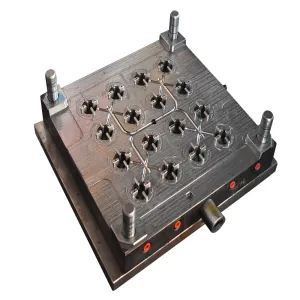
PP Pipe Bitini Bitini ya Moule
Kukabula: PP ya kutunga tiyoNtalu ya bantu me tala: 603Ntalu:Kilumbu ya kubasika: 2025-09-16 23:41:37PP Pipe Bitini Bitini ya Moule Zina ya moule:na bitini ya katiDibulu: 16 ya mabuluBunene ya moule:32mmE nsongo mia mold:2738 yovo 718 muna nsongo ye nsongo .Kielo :kielo ya directntungulu ya moule:Kutunga ya motoMpasi ya core/cavité: HRC 40-45° ya kusadila tiya ya aspirateur ya aspirateurMashini ya kuyidika bankisi: 380 T . Na yina me tala hongjin moule:Hongjin moule kele ya sipesiali na kusala bima ya kusala ba tiyo na nsungi ya bamvula 23, bima ya nene ya bo me sala ti bapipe kele: PVC ya masa mpi bima ya ke sadisaka na kubasisa masa, bima ya bo ke bingaka PPR ya bo me sala ti bapipe, PP mpi...
Nsangu
kitini:
-
[Company News]Customer Photo
2025-12-09 21:31:58
Mambu
kitini:
Ba mvutu ya kusosa kele ve!
Bavideo
kitini:
Ba mvutu ya kusosa kele ve!
Kubaka
kitini:
Ba mvutu ya kusosa kele ve!
Kubaka bantu na kisalu
kitini:
Ba mvutu ya kusosa kele ve!
Bima ya bo ke lomba
Ba mvutu ya kusosa kele ve!




 Nki
Nki Telefone